

Appliance Types
- Air Conditioner
- Automobile
- Chainsaw
- Circular Saw
- Dishwasher
- Drills
- Dryer
- Drywall Screw Gun
- Furnace
- Gas Fireplace
- Gas Grill
- Gas Patio Heater
- Grinder
- Heat Pump
- Impact Driver
- Impact Wrench
- Microwave
- Nailer
- Orbital Sander
- Pool Heaters
- Powerwall
- Range
- Refrigerator
- Television
- Washer
- Water Heater
Appliance Brands
- A.O. Smith
- AccuCold
- Admiral Craft
- AGA
- Airrex
- Amana
- Ambiance
- American Range
- American Standard
- American Water Heaters
- Aquacal
- Armstrong
- Asko
- Avanti
- Avenlur
- Azure
- Beko
- Bellfires
- Bertazzoni
- Blackstone
- Blaze
- Blomberg
- BlueStar
- Bosch
- Bradford White
- Bromic
- Bryant
- Cafe
- Calcana
- Capital
- Carrier
- Char-Broil
- Char-Griller
- Chrysler
- Coates
- Coleman
- Comfortmaker
- Commercial Chef
- Continental
- Cosmo
- Cove
- Crown Verity
- Dacor
- Daikin
- Danby
- Danfoss
- DaVinci
- DCS
- Deco
- DeWALT
- Ducane
- Dyna-Glo
- Dyson
- EcoSmart
- Electrolux
- Element4
- Empava
- Equator
- Eurodib
- European Home
- Everdure
- Farberware
- Fhiaba
- FibroPool
- Fire Sense
- Fisher
- FiveStar
- Flare
- Flash Furniture
- Focus
- Ford
- Forno
- Forte
- Frigidaire
- Fulgor Milano
- Gaggenau
- GE
- General Motors
- GlowBrand
- Goodman
- Grundig
- GSW
- Haier
- Hayward
- Heatstar
- Heil
- Hestan
- Hisense
- Hitachi
- Hotpoint
- iio
- Ilve
- Impecca
- Ingignia
- Insignia
- JennAir
- John Wood
- Keeprite
- Kenmore
- Kenyon
- KitchenAid
- Kucht
- La Cornue
- Lennox
- LG
- Liebherr
- Lifetime
- Lion
- Luxaire
- Lynx
- Magic Chef
- Marvel
- Maytag
- McQuay
- MicroFridge
- Midea
- Miele
- Migali
- Monogram
- Montigo
- Mr Heater
- Napoleon
- Navien
- Nexgrill
- Noritz
- Panasonic
- Patio Comforts
- Payne
- Pentair
- Perlick
- PITT
- Premier
- Raypak
- Real Fyre
- Regency
- Reliance
- Rheem
- Rinnai
- Roma
- Ruud
- Saber
- Samsung
- Schwank
- Sharp
- Smeg
- Solas
- Sony
- Spartherm
- Speed Queen
- StaRite
- State Water Heaters
- Stiebel Eltron
- SubZero
- Summerset
- Summit
- SunGlo
- SunPak
- Sunpentown
- SunStar
- Superiore
- Takagi
- TCL
- TEC
- Tempstar
- Tesla
- Thermador
- Thor Kitchen
- Toshiba
- Town and Country
- Toyota
- Traeger
- Trane
- Twin Eagles
- U-Line
- Unique
- Vaillant Group
- Valor
- Verona
- Victory
- Viessmann
- Viking
- Vizio
- Weber
- Westinghouse
- Whirlpool
- Whynter
- York
- ZLINE
Article Categories
- Air Conditioners
- Appliance Care
- Appliance News
- Dishwasher News
- Drying Machines
- Furnaces
- Gas Fireplaces
- Microwaves
- Pool Heaters
- Refrigerators
- Stoves - Ranges
- Tips and Tricks
- Washing Machines
- Water Heaters
More Articles
GE Oven not heating
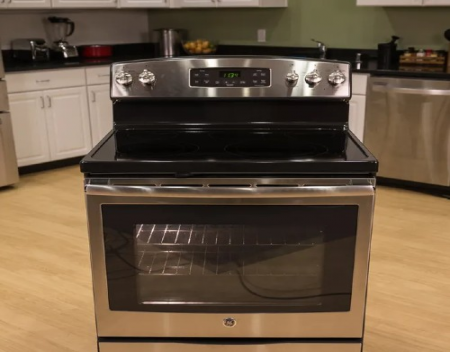
GE Oven not heating.
Igniter.
The igniter is the most commonly defective part for an oven not heating. The igniter has two main functions. First, the igniter draws electrical current through the oven safety valve to open it. Second, the igniter gets hot enough to glow and ignite the gas in the oven burner. If the igniter gets weak, it will fail to open the safety valve correctly. If the valve does not open, the oven will not heat. To determine if the igniter is defective, observe the igniter when the oven is on. If the igniter glows for more than 90 seconds without igniting the gas flame, this indicates that the igniter is too weak to open the valve. If the igniter is weak, replace it. If the igniter does not glow at all, use a multimeter to test the igniter for continuity. If the igniter does not have continuity, replace it.
Bake Element.
When the bake element is heating properly, it glows red hot. If the element does not glow red, this indicates that the element is not heating. Often, if the heating element has burned out, it will be visibly damaged. Inspect the heating element for holes or blisters. To determine if the bake element has burned out, use a multimeter to test the element for continuity. If the bake element does not have continuity, replace it.
Bake or Broil Spark Electrode.
For bake & broil burner ignition an oven burner spark electrode is used to ignite the gas. The electrode is a device that sits right next to the burner. It functions like a spark plug. As power is applied to it a spark jumps from the spark electrode tip to the electrode shield, igniting the gas. If the electrode is broken or worn out the spark may not occur. Visually inspect the electrode assembly for cracks in the porcelain housing or damage to the electrode tip itself. Be aware that a proper ground and the correct polarity of the incoming voltage to the range are necessary for the electrode control to sense the presence of a flame once the burner is ignited. If the burner goes off after ignition check for proper ground and the correct polarity at the wall outlet.
Broil Element.
Inspect the broil element for holes or blisters. When the broil element is heating properly, it glows red hot. If the element does not glow red, this indicates that the element is not heating. Often, if the broil element has burned out, it will be visibly damaged. To determine if the broil element has burned out, use a multimeter to test the element for continuity. If the broil element does not have continuity, replace it.
Incoming Power Problem.
Electric ovens require 240 volts of alternating current. Gas ovens require 120 volts. If an oven won't turn on there could be an incoming power problem. To determine if the electrical outlet is providing sufficient voltage, use a multimeter to test the incoming power at the wall socket.
Thermal Fuse.
If the oven gets too hot, the thermal fuse trips to shut off power to the oven. If the thermal fuse has blown, the oven will not heat. However, this is not a common occurrence. To determine if the thermal fuse is at fault, use a multimeter to test the fuse for continuity. If the thermal fuse does not have continuity, replace it. The thermal fuse cannot be reset—if the fuse has blown, it must be replaced.
Loose or Burnt Wire Connection.
One of the wires that supply power to the oven element or igniter might be burnt out. These wires commonly burn out near the heat source. To determine if a wire has burned out, inspect the wires leading to the element or igniter. If a wire is burned out, it will often be visibly burnt.
Oven Control Board.
The oven control board has relays that send voltage to the bake and broil circuits according to the user settings and sensor input. If the control board is defective, it may not send voltage to the heating components. However, this is rarely the case. Before replacing the control board, first test all of the heating components. If you determine that all of the heating components are working properly, replace the oven control board. Since it’s not easy to test the oven control board, you will have to replace the control board if you suspect it is defective.
SOURCE: repairclinic.com
GE Oven not heating.
Igniter.
The igniter is the most commonly defective part for an oven not heating. The igniter has two main functions. First, the igniter draws electrical current through the oven safety valve to open it. Second, the igniter gets hot enough to glow and ignite the gas in the oven burner. If the igniter gets weak, it will fail to open the safety valve correctly. If the valve does not open, the oven will not heat. To determine if the igniter is defective, observe the igniter when the oven is on. If the igniter glows for more than 90 seconds without igniting the gas flame, this indicates that the igniter is too weak to open the valve. If the igniter is weak, replace it. If the igniter does not glow at all, use a multimeter to test the igniter for continuity. If the igniter does not have continuity, replace it.
Bake Element.
When the bake element is heating properly, it glows red hot. If the element does not glow red, this indicates that the element is not heating. Often, if the heating element has burned out, it will be visibly damaged. Inspect the heating element for holes or blisters. To determine if the bake element has burned out, use a multimeter to test the element for continuity. If the bake element does not have continuity, replace it.
Bake or Broil Spark Electrode.
For bake & broil burner ignition an oven burner spark electrode is used to ignite the gas. The electrode is a device that sits right next to the burner. It functions like a spark plug. As power is applied to it a spark jumps from the spark electrode tip to the electrode shield, igniting the gas. If the electrode is broken or worn out the spark may not occur. Visually inspect the electrode assembly for cracks in the porcelain housing or damage to the electrode tip itself. Be aware that a proper ground and the correct polarity of the incoming voltage to the range are necessary for the electrode control to sense the presence of a flame once the burner is ignited. If the burner goes off after ignition check for proper ground and the correct polarity at the wall outlet.
Broil Element.
Inspect the broil element for holes or blisters. When the broil element is heating properly, it glows red hot. If the element does not glow red, this indicates that the element is not heating. Often, if the broil element has burned out, it will be visibly damaged. To determine if the broil element has burned out, use a multimeter to test the element for continuity. If the broil element does not have continuity, replace it.
Incoming Power Problem.
Electric ovens require 240 volts of alternating current. Gas ovens require 120 volts. If an oven won't turn on there could be an incoming power problem. To determine if the electrical outlet is providing sufficient voltage, use a multimeter to test the incoming power at the wall socket.
Thermal Fuse.
If the oven gets too hot, the thermal fuse trips to shut off power to the oven. If the thermal fuse has blown, the oven will not heat. However, this is not a common occurrence. To determine if the thermal fuse is at fault, use a multimeter to test the fuse for continuity. If the thermal fuse does not have continuity, replace it. The thermal fuse cannot be reset—if the fuse has blown, it must be replaced.
Loose or Burnt Wire Connection.
One of the wires that supply power to the oven element or igniter might be burnt out. These wires commonly burn out near the heat source. To determine if a wire has burned out, inspect the wires leading to the element or igniter. If a wire is burned out, it will often be visibly burnt.
Oven Control Board.
The oven control board has relays that send voltage to the bake and broil circuits according to the user settings and sensor input. If the control board is defective, it may not send voltage to the heating components. However, this is rarely the case. Before replacing the control board, first test all of the heating components. If you determine that all of the heating components are working properly, replace the oven control board. Since it’s not easy to test the oven control board, you will have to replace the control board if you suspect it is defective.
SOURCE: repairclinic.com
What is the Best Type of Range to Buy?
Why is My Refrigerator Lightbulb Not Working?

How Do I Remove a Dent From My Stainless Steel Dryer?
Recall Alert: 2 Million Cosori Air Fryers Recalled
On September the event “2050 Appliances of the Future”

Dreo ChefMaker the worlds first combi fryer secures $1 M on Kickstarter in a day

I attempted to swap the door hinge on my washing machine

Beko Home Appliances unveil new healthy kitchen concept