

Appliance Types
- Air Conditioner
- Automobile
- Chainsaw
- Circular Saw
- Dishwasher
- Drills
- Dryer
- Drywall Screw Gun
- Furnace
- Gas Fireplace
- Gas Grill
- Gas Patio Heater
- Grinder
- Heat Pump
- Impact Driver
- Impact Wrench
- Microwave
- Nailer
- Orbital Sander
- Pool Heaters
- Powerwall
- Range
- Refrigerator
- Television
- Washer
- Water Heater
Appliance Brands
- A.O. Smith
- AccuCold
- Admiral Craft
- AGA
- Airrex
- Amana
- Ambiance
- American Range
- American Standard
- American Water Heaters
- Aquacal
- Armstrong
- Asko
- Avanti
- Avenlur
- Azure
- Beko
- Bellfires
- Bertazzoni
- Blackstone
- Blaze
- Blomberg
- BlueStar
- Bosch
- Bradford White
- Bromic
- Bryant
- Cafe
- Calcana
- Capital
- Carrier
- Char-Broil
- Char-Griller
- Chrysler
- Coates
- Coleman
- Comfortmaker
- Commercial Chef
- Continental
- Cosmo
- Cove
- Crown Verity
- Dacor
- Daikin
- Danby
- Danfoss
- DaVinci
- DCS
- Deco
- DeWALT
- Ducane
- Dyna-Glo
- Dyson
- EcoSmart
- Electrolux
- Element4
- Empava
- Equator
- Eurodib
- European Home
- Everdure
- Farberware
- Fhiaba
- FibroPool
- Fire Sense
- Fisher
- FiveStar
- Flare
- Flash Furniture
- Focus
- Ford
- Forno
- Forte
- Frigidaire
- Fulgor Milano
- Gaggenau
- GE
- General Motors
- GlowBrand
- Goodman
- Grundig
- GSW
- Haier
- Hayward
- Heatstar
- Heil
- Hestan
- Hisense
- Hitachi
- Hotpoint
- iio
- Ilve
- Impecca
- Ingignia
- Insignia
- JennAir
- John Wood
- Keeprite
- Kenmore
- Kenyon
- KitchenAid
- Kucht
- La Cornue
- Lennox
- LG
- Liebherr
- Lifetime
- Lion
- Luxaire
- Lynx
- Magic Chef
- Marvel
- Maytag
- McQuay
- MicroFridge
- Midea
- Miele
- Migali
- Monogram
- Montigo
- Mr Heater
- Napoleon
- Navien
- Nexgrill
- Noritz
- Panasonic
- Patio Comforts
- Payne
- Pentair
- Perlick
- PITT
- Premier
- Raypak
- Real Fyre
- Regency
- Reliance
- Rheem
- Rinnai
- Roma
- Ruud
- Saber
- Samsung
- Schwank
- Sharp
- Smeg
- Solas
- Sony
- Spartherm
- Speed Queen
- StaRite
- State Water Heaters
- Stiebel Eltron
- SubZero
- Summerset
- Summit
- SunGlo
- SunPak
- Sunpentown
- SunStar
- Superiore
- Takagi
- TCL
- TEC
- Tempstar
- Tesla
- Thermador
- Thor Kitchen
- Toshiba
- Town and Country
- Toyota
- Traeger
- Trane
- Twin Eagles
- U-Line
- Unique
- Vaillant Group
- Valor
- Verona
- Victory
- Viessmann
- Viking
- Vizio
- Weber
- Westinghouse
- Whirlpool
- Whynter
- York
- ZLINE
Article Categories
- Air Conditioners
- Appliance Care
- Appliance News
- Dishwasher News
- Drying Machines
- Furnaces
- Gas Fireplaces
- Microwaves
- Pool Heaters
- Refrigerators
- Stoves - Ranges
- Tips and Tricks
- Washing Machines
- Water Heaters
More Articles
How exactly does the ice machine work in fridges?
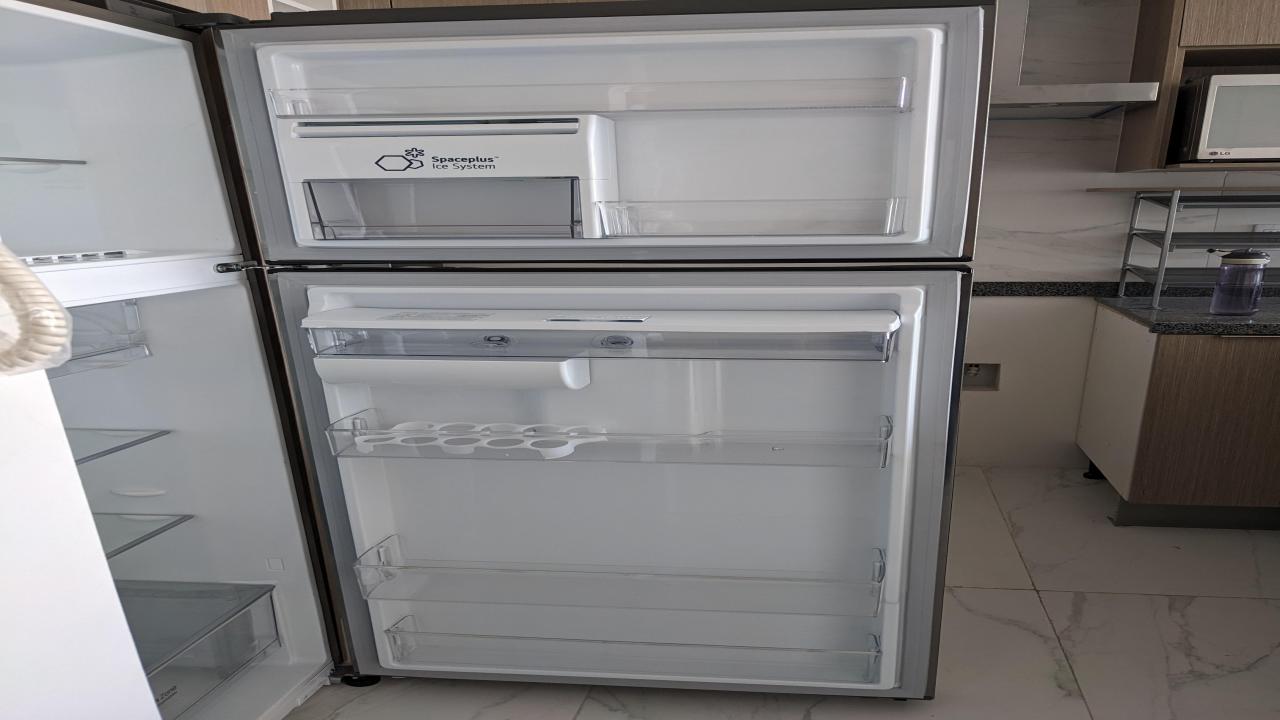
The ice machine in a refrigerator typically works through a process involving several key components and mechanisms. While different refrigerator models may have slight variations, the following is a general explanation of how an ice machine operates:
-
Water supply: The refrigerator is connected to a water supply, either through a dedicated water line or a manual water filling mechanism. This water supply provides the water required for ice production.
-
Water valve: Inside the refrigerator, there is a water valve that controls the flow of water from the supply line to the ice machine. When the ice maker initiates a cycle, the water valve opens, allowing water to enter the ice-making mechanism.
-
Fill tube: The water flows through a fill tube that directs it into the ice maker. The fill tube is positioned above the ice mold or tray where the ice will be formed.
-
Ice mold or tray: The ice mold is a container that holds the water and allows it to freeze into ice. It typically has individual compartments or molds where the ice cubes will be formed. The mold is usually made of a material with good thermal conductivity, such as metal.
-
Thermostat and timer: The ice machine has a thermostat that monitors the temperature inside the freezer compartment. When the temperature drops below a certain threshold, indicating that the water in the mold is likely frozen, the thermostat signals the ice-making process to proceed. Additionally, a timer may be present to control the duration of the ice-making cycle.
-
Heater: To facilitate the ice release process, a heater is often employed. When the ice is ready to be harvested, the heater warms the bottom of the ice mold, causing the ice cubes to loosen and detach from the mold.
-
Ejector blades: Connected to a motor, the ejector blades or fingers are responsible for pushing or prying the ice cubes out of the mold. As the blades rotate or move, they apply force to the ice cubes, causing them to be released from the mold.
-
Harvesting and collection: Once the ice cubes are freed from the mold, they fall into a collection bin or container located below the ice mold. The bin stores the ice until it is manually or automatically dispensed into a storage compartment or ice dispenser for easy access.
The ice machine in a refrigerator typically works through a process involving several key components and mechanisms. While different refrigerator models may have slight variations, the following is a general explanation of how an ice machine operates:
-
Water supply: The refrigerator is connected to a water supply, either through a dedicated water line or a manual water filling mechanism. This water supply provides the water required for ice production.
-
Water valve: Inside the refrigerator, there is a water valve that controls the flow of water from the supply line to the ice machine. When the ice maker initiates a cycle, the water valve opens, allowing water to enter the ice-making mechanism.
-
Fill tube: The water flows through a fill tube that directs it into the ice maker. The fill tube is positioned above the ice mold or tray where the ice will be formed.
-
Ice mold or tray: The ice mold is a container that holds the water and allows it to freeze into ice. It typically has individual compartments or molds where the ice cubes will be formed. The mold is usually made of a material with good thermal conductivity, such as metal.
-
Thermostat and timer: The ice machine has a thermostat that monitors the temperature inside the freezer compartment. When the temperature drops below a certain threshold, indicating that the water in the mold is likely frozen, the thermostat signals the ice-making process to proceed. Additionally, a timer may be present to control the duration of the ice-making cycle.
-
Heater: To facilitate the ice release process, a heater is often employed. When the ice is ready to be harvested, the heater warms the bottom of the ice mold, causing the ice cubes to loosen and detach from the mold.
-
Ejector blades: Connected to a motor, the ejector blades or fingers are responsible for pushing or prying the ice cubes out of the mold. As the blades rotate or move, they apply force to the ice cubes, causing them to be released from the mold.
-
Harvesting and collection: Once the ice cubes are freed from the mold, they fall into a collection bin or container located below the ice mold. The bin stores the ice until it is manually or automatically dispensed into a storage compartment or ice dispenser for easy access.
Energy-Saving Appliance Hacks for Every Home
Robotics for All Ecovacs Robotics redefines corporate vision and mission in 2022
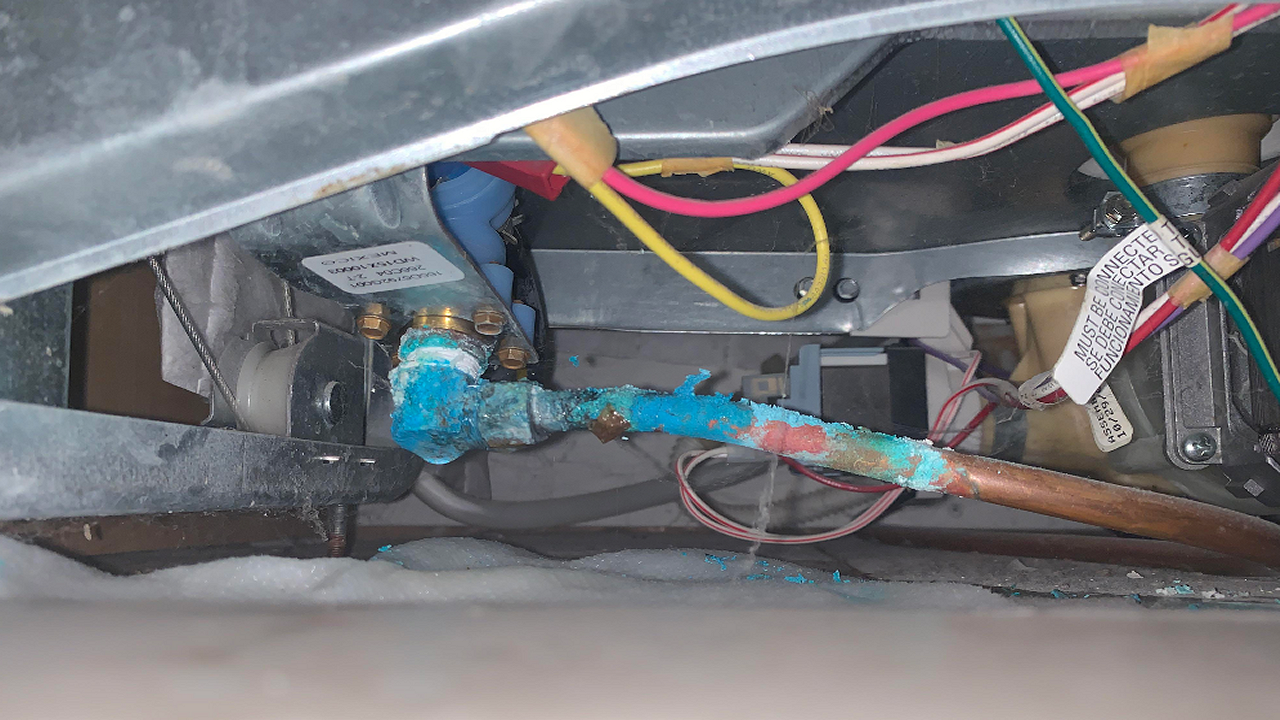
What is this corroded part called? Should I replace it, or can self-fluxing tape fix the leak?
How can I clean a microwave oven effectively?
Maytag Refrigerator not defrosting
How to Extend the Life of Your Appliances
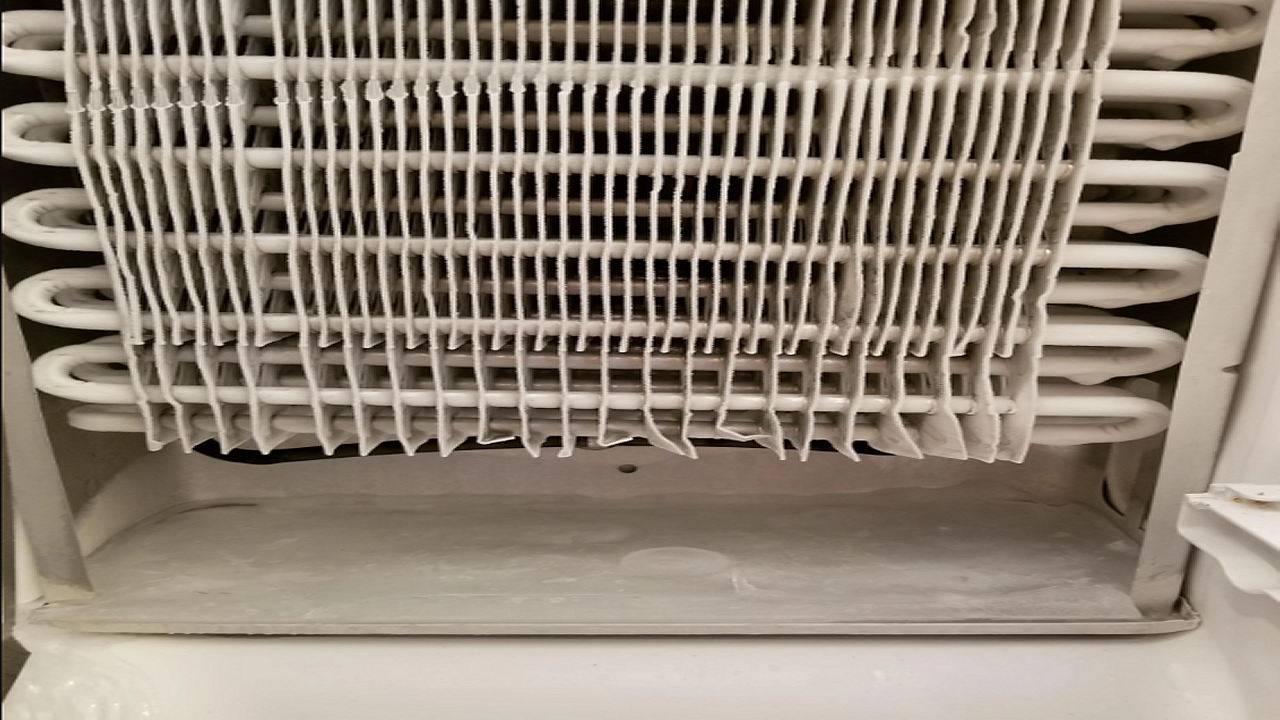
My Frigidaire Refrigerator Has Water Accumulating on Freezer Side Bottom
How much should someone spend on a ceiling fan?
What is the Difference Between Single-Stage, Two-Stage, and Modulating Furnaces?