


Appliance Types
- Air Conditioner
- Automobile
- Chainsaw
- Circular Saw
- Dishwasher
- Drills
- Dryer
- Drywall Screw Gun
- Furnace
- Gas Fireplace
- Gas Grill
- Gas Patio Heater
- Grinder
- Heat Pump
- Impact Driver
- Impact Wrench
- Microwave
- Nailer
- Orbital Sander
- Pool Heaters
- Powerwall
- Range
- Refrigerator
- Television
- Washer
- Water Heater
Appliance Brands
- A.O. Smith
- AccuCold
- Admiral Craft
- AGA
- Airrex
- Amana
- Ambiance
- American Range
- American Standard
- American Water Heaters
- Aquacal
- Armstrong
- Asko
- Avanti
- Avenlur
- Azure
- Beko
- Bellfires
- Bertazzoni
- Blackstone
- Blaze
- Blomberg
- BlueStar
- Bosch
- Bradford White
- Bromic
- Bryant
- Cafe
- Calcana
- Capital
- Carrier
- Char-Broil
- Char-Griller
- Chrysler
- Coates
- Coleman
- Comfortmaker
- Commercial Chef
- Continental
- Cosmo
- Cove
- Crown Verity
- Dacor
- Daikin
- Danby
- Danfoss
- DaVinci
- DCS
- Deco
- DeWALT
- Ducane
- Dyna-Glo
- Dyson
- EcoSmart
- Electrolux
- Element4
- Empava
- Equator
- Eurodib
- European Home
- Everdure
- Farberware
- Fhiaba
- FibroPool
- Fire Sense
- Fisher
- FiveStar
- Flare
- Flash Furniture
- Focus
- Ford
- Forno
- Forte
- Frigidaire
- Fulgor Milano
- Gaggenau
- GE
- General Motors
- GlowBrand
- Goodman
- Grundig
- GSW
- Haier
- Hayward
- Heatstar
- Heil
- Hestan
- Hisense
- Hitachi
- Hotpoint
- iio
- Ilve
- Impecca
- Ingignia
- Insignia
- JennAir
- John Wood
- Keeprite
- Kenmore
- Kenyon
- KitchenAid
- Kucht
- La Cornue
- Lennox
- LG
- Liebherr
- Lifetime
- Lion
- Luxaire
- Lynx
- Magic Chef
- Marvel
- Maytag
- McQuay
- MicroFridge
- Midea
- Miele
- Migali
- Monogram
- Montigo
- Mr Heater
- Napoleon
- Navien
- Nexgrill
- Noritz
- Panasonic
- Patio Comforts
- Payne
- Pentair
- Perlick
- PITT
- Premier
- Raypak
- Real Fyre
- Regency
- Reliance
- Rheem
- Rinnai
- Roma
- Ruud
- Saber
- Samsung
- Schwank
- Sharp
- Smeg
- Solas
- Sony
- Spartherm
- Speed Queen
- StaRite
- State Water Heaters
- Stiebel Eltron
- SubZero
- Summerset
- Summit
- SunGlo
- SunPak
- Sunpentown
- SunStar
- Superiore
- Takagi
- TCL
- TEC
- Tempstar
- Tesla
- Thermador
- Thor Kitchen
- Toshiba
- Town and Country
- Toyota
- Traeger
- Trane
- Twin Eagles
- U-Line
- Unique
- Vaillant Group
- Valor
- Verona
- Victory
- Viessmann
- Viking
- Vizio
- Weber
- Westinghouse
- Whirlpool
- Whynter
- York
- ZLINE
Article Categories
- Air Conditioners
- Appliance Care
- Appliance News
- Dishwasher News
- Drying Machines
- Furnaces
- Gas Fireplaces
- Microwaves
- Pool Heaters
- Refrigerators
- Stoves - Ranges
- Tips and Tricks
- Washing Machines
- Water Heaters
More Articles
My GE Refrigerator is Not Cooling
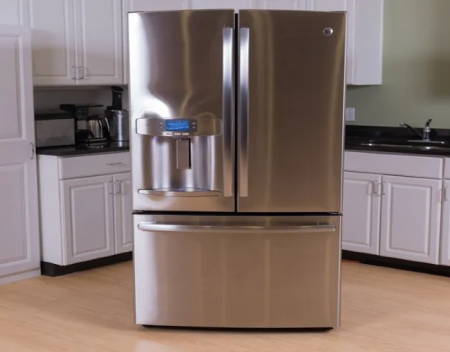
My GE Refrigerator is Not Cooling.
Condenser Coils are Dirty.
The condenser coils are usually located under the refrigerator. They dissipate heat as refrigerant passes through them. If the condenser coils are dirty, they won’t dissipate the heat effectively. As debris builds up on the coils, the refrigerator becomes less efficient, causing the refrigerator to work harder to cool down. If the coils are significantly dirty, the refrigerator will not be able to maintain the proper temperature. Check the condenser coils to determine if they are dirty—if the condenser coils are dirty, clean them.
Condenser Fan Motor.
The condenser fan motor draws air through the condenser coils and over the compressor. If the condenser fan motor is not working properly, the refrigerator won’t cool properly. To determine if the fan motor is defective, first check the fan blade for obstructions. Next, try turning the fan motor blade by hand. If the blade does not spin freely, replace the condenser fan motor. If no obstructions are present and the fan blade spins freely, use a multimeter to test the fan motor for continuity. If the condenser fan motor does not have continuity, replace it.
Evaporator Fan Motor.
The evaporator fan motor draws air over the evaporator (cooling) coils and circulates it throughout the refrigerator and freezer compartments. Some refrigerators have more than one evaporator fan motor. On refrigerators with only one evaporator, the evaporator is located in the freezer compartment. If the evaporator fan is not working, it will not circulate the cold air to the refrigerator compartment. If this occurs, the freezer may still get cold, while the refrigerator will not get cold. To determine if the evaporator fan motor is defective, try turning the fan blade by hand. If the fan blade does not turn freely, replace the fan motor. Additionally, if the motor is unusually noisy, replace it. Finally, if the motor does not run at all, use a multimeter to test the motor windings for continuity. If the windings do not have continuity, replace the evaporator fan motor.
Start Relay.
The start relay works in conjunction with the start winding to start the compressor. If the start relay is defective, the compressor may sometimes fail to run or may not run at all. As a result, the refrigerator will not be cold enough. To determine if the start relay is defective, use a multimeter to test it for continuity between the run and start terminal sockets. If the start relay does not have continuity between the run and start terminal sockets, replace it. In addition, if the start relay has a burnt odor, replace it.
Temperature Control Thermostat.
The temperature control thermostat directs voltage to the compressor, evaporator fan motor, and condenser fan motor (if applicable). If the temperature control thermostat is not working properly, it may prevent the refrigerant system from running. To determine if the thermostat is defective, rotate the thermostat from the lowest setting to the highest setting and listen for a click. If the thermostat clicks, it is not likely defective. If the thermostat does not click, use a multimeter to test the thermostat for continuity. If the temperature control thermostat does not have continuity in any setting, replace it.
Start Capacitor.
The start capacitor provides a boost of power to the compressor during start-up. If the start capacitor isn’t working, the compressor may not start. As a result, the refrigerator will not cool. To determine if the start capacitor is defective, test it with a multimeter. If the start capacitor is defective, replace it.
Temperature Control Board.
The temperature control board provides voltage to the compressor and fan motors. If the temperature control board is defective, it will stop sending voltage to the cooling system. However, this is not a common occurrence. Control boards are often misdiagnosed—before replacing the control board, first test all of the more commonly defective components. If none of the other components are defective, consider replacing the temperature control board.
SOURCE: repairclinic.com
My GE Refrigerator is Not Cooling.
Condenser Coils are Dirty.
The condenser coils are usually located under the refrigerator. They dissipate heat as refrigerant passes through them. If the condenser coils are dirty, they won’t dissipate the heat effectively. As debris builds up on the coils, the refrigerator becomes less efficient, causing the refrigerator to work harder to cool down. If the coils are significantly dirty, the refrigerator will not be able to maintain the proper temperature. Check the condenser coils to determine if they are dirty—if the condenser coils are dirty, clean them.
Condenser Fan Motor.
The condenser fan motor draws air through the condenser coils and over the compressor. If the condenser fan motor is not working properly, the refrigerator won’t cool properly. To determine if the fan motor is defective, first check the fan blade for obstructions. Next, try turning the fan motor blade by hand. If the blade does not spin freely, replace the condenser fan motor. If no obstructions are present and the fan blade spins freely, use a multimeter to test the fan motor for continuity. If the condenser fan motor does not have continuity, replace it.
Evaporator Fan Motor.
The evaporator fan motor draws air over the evaporator (cooling) coils and circulates it throughout the refrigerator and freezer compartments. Some refrigerators have more than one evaporator fan motor. On refrigerators with only one evaporator, the evaporator is located in the freezer compartment. If the evaporator fan is not working, it will not circulate the cold air to the refrigerator compartment. If this occurs, the freezer may still get cold, while the refrigerator will not get cold. To determine if the evaporator fan motor is defective, try turning the fan blade by hand. If the fan blade does not turn freely, replace the fan motor. Additionally, if the motor is unusually noisy, replace it. Finally, if the motor does not run at all, use a multimeter to test the motor windings for continuity. If the windings do not have continuity, replace the evaporator fan motor.
Start Relay.
The start relay works in conjunction with the start winding to start the compressor. If the start relay is defective, the compressor may sometimes fail to run or may not run at all. As a result, the refrigerator will not be cold enough. To determine if the start relay is defective, use a multimeter to test it for continuity between the run and start terminal sockets. If the start relay does not have continuity between the run and start terminal sockets, replace it. In addition, if the start relay has a burnt odor, replace it.
Temperature Control Thermostat.
The temperature control thermostat directs voltage to the compressor, evaporator fan motor, and condenser fan motor (if applicable). If the temperature control thermostat is not working properly, it may prevent the refrigerant system from running. To determine if the thermostat is defective, rotate the thermostat from the lowest setting to the highest setting and listen for a click. If the thermostat clicks, it is not likely defective. If the thermostat does not click, use a multimeter to test the thermostat for continuity. If the temperature control thermostat does not have continuity in any setting, replace it.
Start Capacitor.
The start capacitor provides a boost of power to the compressor during start-up. If the start capacitor isn’t working, the compressor may not start. As a result, the refrigerator will not cool. To determine if the start capacitor is defective, test it with a multimeter. If the start capacitor is defective, replace it.
Temperature Control Board.
The temperature control board provides voltage to the compressor and fan motors. If the temperature control board is defective, it will stop sending voltage to the cooling system. However, this is not a common occurrence. Control boards are often misdiagnosed—before replacing the control board, first test all of the more commonly defective components. If none of the other components are defective, consider replacing the temperature control board.
SOURCE: repairclinic.com
Older Bosch dishwasher: what is this part and how big a deal is it to replace it or have it replaced
Hisense Pure Jet washing machines series: less allergen and easy ironing

New washing machine makin crazy noise while spinning
What is everyone’s thoughts on washer dryer combo with a heat pump? And is there a recommended mod
How do I fix a noisy air conditioner?

New washer dryer- too complicated
Dishwasher Couldn't Be Installed Due to Lack of Side to Side Adjusting
How Do I Clean and Maintain My Coffee Maker?

Strange Furnace Noises and What They Mean

NKBA’s Midyear Market Outlook Forecasts Increase Over 2021