

Appliance Types
- Air Conditioner
- Automobile
- Chainsaw
- Circular Saw
- Dishwasher
- Drills
- Dryer
- Drywall Screw Gun
- Furnace
- Gas Fireplace
- Gas Grill
- Gas Patio Heater
- Grinder
- Heat Pump
- Impact Driver
- Impact Wrench
- Microwave
- Nailer
- Orbital Sander
- Pool Heaters
- Powerwall
- Range
- Refrigerator
- Television
- Washer
- Water Heater
Appliance Brands
- A.O. Smith
- AccuCold
- Admiral Craft
- AGA
- Airrex
- Amana
- Ambiance
- American Range
- American Standard
- American Water Heaters
- Aquacal
- Armstrong
- Asko
- Avanti
- Avenlur
- Azure
- Beko
- Bellfires
- Bertazzoni
- Blackstone
- Blaze
- Blomberg
- BlueStar
- Bosch
- Bradford White
- Bromic
- Bryant
- Cafe
- Calcana
- Capital
- Carrier
- Char-Broil
- Char-Griller
- Chrysler
- Coates
- Coleman
- Comfortmaker
- Commercial Chef
- Continental
- Cosmo
- Cove
- Crown Verity
- Dacor
- Daikin
- Danby
- Danfoss
- DaVinci
- DCS
- Deco
- DeWALT
- Ducane
- Dyna-Glo
- Dyson
- EcoSmart
- Electrolux
- Element4
- Empava
- Equator
- Eurodib
- European Home
- Everdure
- Farberware
- Fhiaba
- FibroPool
- Fire Sense
- Fisher
- FiveStar
- Flare
- Flash Furniture
- Focus
- Ford
- Forno
- Forte
- Frigidaire
- Fulgor Milano
- Gaggenau
- GE
- General Motors
- GlowBrand
- Goodman
- Grundig
- GSW
- Haier
- Hayward
- Heatstar
- Heil
- Hestan
- Hisense
- Hitachi
- Hotpoint
- iio
- Ilve
- Impecca
- Ingignia
- Insignia
- JennAir
- John Wood
- Keeprite
- Kenmore
- Kenyon
- KitchenAid
- Kucht
- La Cornue
- Lennox
- LG
- Liebherr
- Lifetime
- Lion
- Luxaire
- Lynx
- Magic Chef
- Marvel
- Maytag
- McQuay
- MicroFridge
- Midea
- Miele
- Migali
- Monogram
- Montigo
- Mr Heater
- Napoleon
- Navien
- Nexgrill
- Noritz
- Panasonic
- Patio Comforts
- Payne
- Pentair
- Perlick
- PITT
- Premier
- Raypak
- Real Fyre
- Regency
- Reliance
- Rheem
- Rinnai
- Roma
- Ruud
- Saber
- Samsung
- Schwank
- Sharp
- Smeg
- Solas
- Sony
- Spartherm
- Speed Queen
- StaRite
- State Water Heaters
- Stiebel Eltron
- SubZero
- Summerset
- Summit
- SunGlo
- SunPak
- Sunpentown
- SunStar
- Superiore
- Takagi
- TCL
- TEC
- Tempstar
- Tesla
- Thermador
- Thor Kitchen
- Toshiba
- Town and Country
- Toyota
- Traeger
- Trane
- Twin Eagles
- U-Line
- Unique
- Vaillant Group
- Valor
- Verona
- Victory
- Viessmann
- Viking
- Vizio
- Weber
- Westinghouse
- Whirlpool
- Whynter
- York
- ZLINE
Article Categories
- Air Conditioners
- Appliance Care
- Appliance News
- Dishwasher News
- Drying Machines
- Furnaces
- Gas Fireplaces
- Microwaves
- Pool Heaters
- Refrigerators
- Stoves - Ranges
- Tips and Tricks
- Washing Machines
- Water Heaters
More Articles
Whirlpool outlines progress on its 2030 sustainability targets
As part of this update, Whirlpool Corporation, building on its long history of climate action, is accelerating its commitment to sustainable operations through investments in renewable energy, manufacturing plant retrofits and on-going energy, water, and waste reduction projects.
Marc Bitzer, Chairman and CEO of Whirlpool Corporation, said: “Our vision at Whirlpool is to improve life at home. We know fulfilling that vision requires us to think not just in terms of the four walls around us and the communities in which we live, but of the planet that sustains us.
“Over the course of our history we have consistently developed products and technologies that deliver on this vision.”
Marc Bitzer, Chairman and CEO of Whirlpool Corporation
Mr Bitzer said that in 2021, Whirlpool Corporation:
Drove a 27% reduction of greenhouse gas (GHG) emissions globally, for all Scope 1 and Scope 2 emissions compared to a 2016 baseline, accelerating the company’s progress to meet its Net Zero target by 2030;Achieved 14% Scope 3 Category 11 emissions reduction, in line with its target reduction of 20% by 2030, compared to 2016 levels (with Scope 3 emissions in EMEA having reduced by 60% since 2005);Issued its first Sustainability Bond, with the proceeds allocated to drive positive environmental and social impacts; andContinued to develop innovative technologies and products that reduce its environmental impact.
Ron Voglewede, director of sustainability at Whirlpool Corporation, says the company’s approach to fostering long-term, sustainably resilient operations starts with innovative design and technology to improve energy and water efficiency, as well as recyclability.
He adds that continuous improvements as part of the World Class Manufacturing process have been rolled out in plants and operations across the manufacturing process and supply chain, to produce the highest quality appliances with the lowest possible waste.
“Whirlpool takes a holistic, long-term approach to environmental sustainability,” Mr Voglewede said.
“It’s not too far into the future that we envisage manufacturing home appliances in plants that are 100% renewable-powered with off-site and expanded on-site wind farms and solar panels, and an end-of-life product recycling programme which directly feeds into our own supply chain for new products.”
The company is prioritising the use of on-site renewables, and in the UK, for example, all sites are powered by 100% renewable energy generated by wind and hydro power. While it looks to overcome the barriers preventing the use of on-site renewables across the region, the company is exploring pan-European Virtual Power Purchase Agreements to reduce energy usage at all EMEA sites.
In addition, Whirlpool says it is on track to achieve its Zero Waste to Landfill (ZWtL) goal for all manufacturing sites by the end of the year.
Currently, 90% of its sites have achieved Gold or Platinum ratings using the UL ECVP 2799 Zero Waste to Landfill standard, and in EMEA approximately 98% of the waste generated is diverted rather than landfilled or incinerated without energy recovery.
Mr Bitzer highlighted that Whirlpool Corporation’s average refrigerators use less energy than a 60 Watt light bulb, its clothes washers have 57% more capacity than they did in 1992, and they use 78% less energy, all without compromising quality and function.
He continued: “Overall, Whirlpool Corporation has reduced 60% of its product emissions since 2005, and continued to invest in innovation to launch leading products that improve performance, while lowering overall carbon footprint.”
An initiative in Europe has led to the removal of expanded polystyrene (EPS) packaging from cooking products and dishwashers sold to one of Whirlpool’s large retail customers.
The company is also considering how it can use its scale to drive sustainable behaviours, from educating consumers about not needing to pre-rinse dishes before placing them in the dishwasher, to using connected appliance features to run their appliances during the best times to have the least impact on the electrical grid.
Read also: WHIRLPOOL OPENS NEW CALL CENTRE IN FRANCE
Reposted From Source: news.ifa-berlin.com
As part of this update, Whirlpool Corporation, building on its long history of climate action, is accelerating its commitment to sustainable operations through investments in renewable energy, manufacturing plant retrofits and on-going energy, water, and waste reduction projects.
Marc Bitzer, Chairman and CEO of Whirlpool Corporation, said: “Our vision at Whirlpool is to improve life at home. We know fulfilling that vision requires us to think not just in terms of the four walls around us and the communities in which we live, but of the planet that sustains us.
“Over the course of our history we have consistently developed products and technologies that deliver on this vision.”
Marc Bitzer, Chairman and CEO of Whirlpool Corporation
Mr Bitzer said that in 2021, Whirlpool Corporation:
Drove a 27% reduction of greenhouse gas (GHG) emissions globally, for all Scope 1 and Scope 2 emissions compared to a 2016 baseline, accelerating the company’s progress to meet its Net Zero target by 2030;Achieved 14% Scope 3 Category 11 emissions reduction, in line with its target reduction of 20% by 2030, compared to 2016 levels (with Scope 3 emissions in EMEA having reduced by 60% since 2005);Issued its first Sustainability Bond, with the proceeds allocated to drive positive environmental and social impacts; andContinued to develop innovative technologies and products that reduce its environmental impact.
Ron Voglewede, director of sustainability at Whirlpool Corporation, says the company’s approach to fostering long-term, sustainably resilient operations starts with innovative design and technology to improve energy and water efficiency, as well as recyclability.
He adds that continuous improvements as part of the World Class Manufacturing process have been rolled out in plants and operations across the manufacturing process and supply chain, to produce the highest quality appliances with the lowest possible waste.
“Whirlpool takes a holistic, long-term approach to environmental sustainability,” Mr Voglewede said.
“It’s not too far into the future that we envisage manufacturing home appliances in plants that are 100% renewable-powered with off-site and expanded on-site wind farms and solar panels, and an end-of-life product recycling programme which directly feeds into our own supply chain for new products.”
The company is prioritising the use of on-site renewables, and in the UK, for example, all sites are powered by 100% renewable energy generated by wind and hydro power. While it looks to overcome the barriers preventing the use of on-site renewables across the region, the company is exploring pan-European Virtual Power Purchase Agreements to reduce energy usage at all EMEA sites.
In addition, Whirlpool says it is on track to achieve its Zero Waste to Landfill (ZWtL) goal for all manufacturing sites by the end of the year.
Currently, 90% of its sites have achieved Gold or Platinum ratings using the UL ECVP 2799 Zero Waste to Landfill standard, and in EMEA approximately 98% of the waste generated is diverted rather than landfilled or incinerated without energy recovery.
Mr Bitzer highlighted that Whirlpool Corporation’s average refrigerators use less energy than a 60 Watt light bulb, its clothes washers have 57% more capacity than they did in 1992, and they use 78% less energy, all without compromising quality and function.
He continued: “Overall, Whirlpool Corporation has reduced 60% of its product emissions since 2005, and continued to invest in innovation to launch leading products that improve performance, while lowering overall carbon footprint.”
An initiative in Europe has led to the removal of expanded polystyrene (EPS) packaging from cooking products and dishwashers sold to one of Whirlpool’s large retail customers.
The company is also considering how it can use its scale to drive sustainable behaviours, from educating consumers about not needing to pre-rinse dishes before placing them in the dishwasher, to using connected appliance features to run their appliances during the best times to have the least impact on the electrical grid.
Read also: WHIRLPOOL OPENS NEW CALL CENTRE IN FRANCE
Reposted From Source: news.ifa-berlin.com
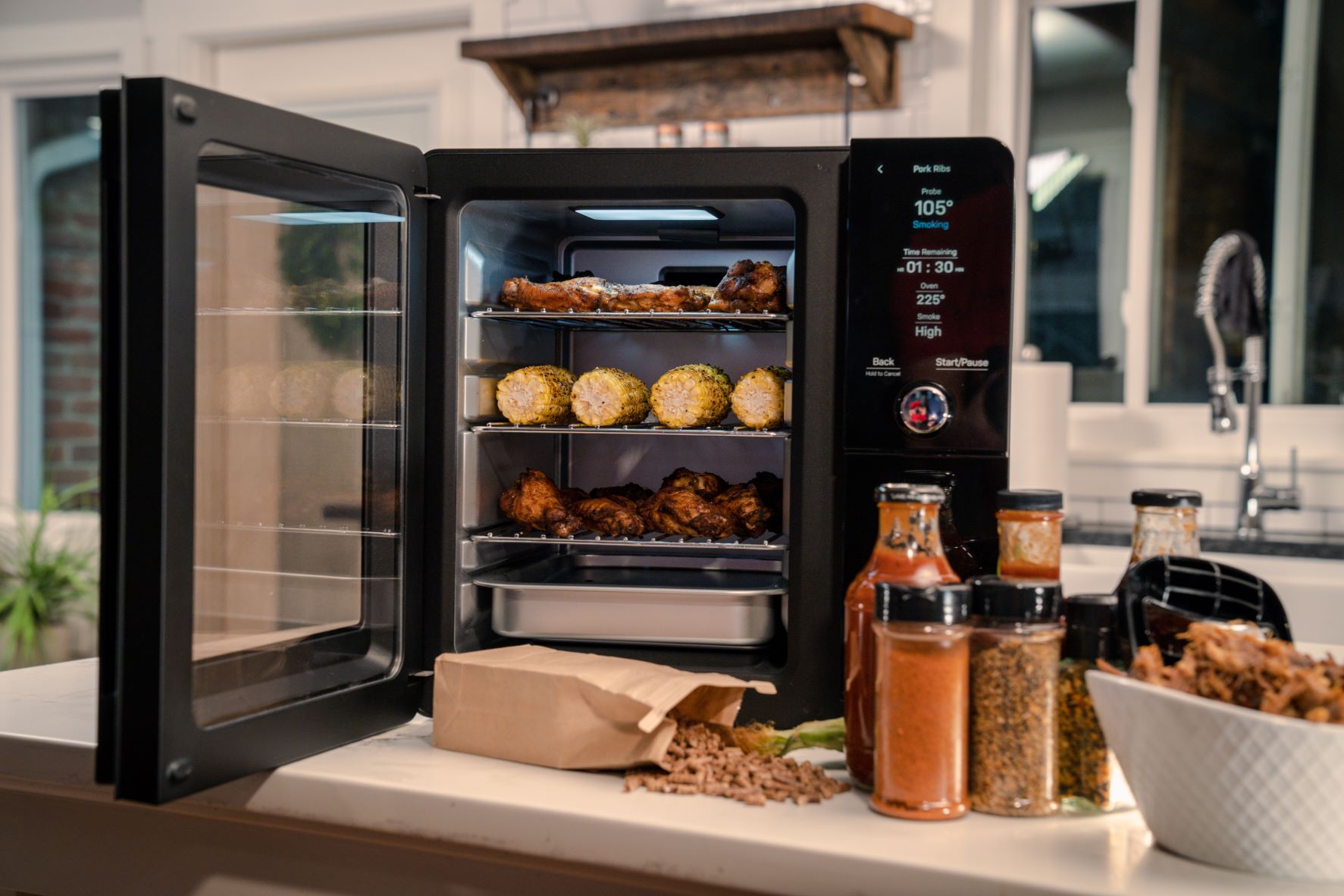
With Arden FirstBuild changes the barbecue rules
Fulgor Milano will be at KBIS 2023

Quartz countertop is very hot after running dishwasher
Why is my new fridge water like this?

What is the best way to use the dishwasher
Samsung fridge stops getting cold over night
Who to trust? Consumer Reports, or a very experienced repair guy?
Bold initiative by Samsung to make household appliances more sustainable in 2022