


Appliance Types
- Air Conditioner
- Automobile
- Chainsaw
- Circular Saw
- Dishwasher
- Drills
- Dryer
- Drywall Screw Gun
- Furnace
- Gas Fireplace
- Gas Grill
- Gas Patio Heater
- Grinder
- Heat Pump
- Impact Driver
- Impact Wrench
- Microwave
- Nailer
- Orbital Sander
- Pool Heaters
- Powerwall
- Range
- Refrigerator
- Television
- Washer
- Water Heater
Appliance Brands
- A.O. Smith
- AccuCold
- Admiral Craft
- AGA
- Airrex
- Amana
- Ambiance
- American Range
- American Standard
- American Water Heaters
- Aquacal
- Armstrong
- Asko
- Avanti
- Avenlur
- Azure
- Beko
- Bellfires
- Bertazzoni
- Blackstone
- Blaze
- Blomberg
- BlueStar
- Bosch
- Bradford White
- Bromic
- Bryant
- Cafe
- Calcana
- Capital
- Carrier
- Char-Broil
- Char-Griller
- Chrysler
- Coates
- Coleman
- Comfortmaker
- Commercial Chef
- Continental
- Cosmo
- Cove
- Crown Verity
- Dacor
- Daikin
- Danby
- Danfoss
- DaVinci
- DCS
- Deco
- DeWALT
- Ducane
- Dyna-Glo
- Dyson
- EcoSmart
- Electrolux
- Element4
- Empava
- Equator
- Eurodib
- European Home
- Everdure
- Farberware
- Fhiaba
- FibroPool
- Fire Sense
- Fisher
- FiveStar
- Flare
- Flash Furniture
- Focus
- Ford
- Forno
- Forte
- Frigidaire
- Fulgor Milano
- Gaggenau
- GE
- General Motors
- GlowBrand
- Goodman
- Grundig
- GSW
- Haier
- Hayward
- Heatstar
- Heil
- Hestan
- Hisense
- Hitachi
- Hotpoint
- iio
- Ilve
- Impecca
- Ingignia
- Insignia
- JennAir
- John Wood
- Keeprite
- Kenmore
- Kenyon
- KitchenAid
- Kucht
- La Cornue
- Lennox
- LG
- Liebherr
- Lifetime
- Lion
- Luxaire
- Lynx
- Magic Chef
- Marvel
- Maytag
- McQuay
- MicroFridge
- Midea
- Miele
- Migali
- Monogram
- Montigo
- Mr Heater
- Napoleon
- Navien
- Nexgrill
- Noritz
- Panasonic
- Patio Comforts
- Payne
- Pentair
- Perlick
- PITT
- Premier
- Raypak
- Real Fyre
- Regency
- Reliance
- Rheem
- Rinnai
- Roma
- Ruud
- Saber
- Samsung
- Schwank
- Sharp
- Smeg
- Solas
- Sony
- Spartherm
- Speed Queen
- StaRite
- State Water Heaters
- Stiebel Eltron
- SubZero
- Summerset
- Summit
- SunGlo
- SunPak
- Sunpentown
- SunStar
- Superiore
- Takagi
- TCL
- TEC
- Tempstar
- Tesla
- Thermador
- Thor Kitchen
- Toshiba
- Town and Country
- Toyota
- Traeger
- Trane
- Twin Eagles
- U-Line
- Unique
- Vaillant Group
- Valor
- Verona
- Victory
- Viessmann
- Viking
- Vizio
- Weber
- Westinghouse
- Whirlpool
- Whynter
- York
- ZLINE
Article Categories
- Air Conditioners
- Appliance Care
- Appliance News
- Dishwasher News
- Drying Machines
- Furnaces
- Gas Fireplaces
- Microwaves
- Pool Heaters
- Refrigerators
- Stoves - Ranges
- Tips and Tricks
- Washing Machines
- Water Heaters
More Articles
Stopping Cross-Contamination in the Refrigerator
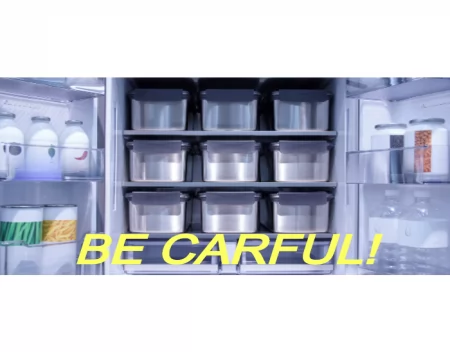
Storing your food properly is essential for food safety, especially if you’re in the restaurant business. Learn how you can prevent cross-contamination inside your refrigerator.
What is Cross-Contamination?
Cross-contamination is when food becomes contaminated with any harmful agents or substances. One example of this is when dangerous bacteria spreads to other foods or surfaces. It’s really easy for cross-contamination to occur without you realizing it, especially in a commercial kitchen. Consuming contaminated food is a serious health risk, as food allergens and chemicals can make your customers sick and cause allergic reactions. Preventing cross-contamination and other food safety hazards should be your top priority.
Some people believe that bacteria can’t survive in cold temperatures, but that is sadly not the case. Most refrigerators are set to between 3 and 4°C (37 to 40°F), but some bacteria, like Listeria, can survive and multiply in temperatures as low as 0°C / 32°F. Disease-causing bacteria isn’t the only thing you should be concerned about. Food allergens, chemicals, and physical objects all pose a threat to a consumer’s health. Consider the following examples of cross-contamination.
- Sauce from a cracked container leaks onto a different food item in the refrigerator.
- An employee breaks some glass in the walk-in cooler, and there’s some uncovered containers of vegetables on the bottom shelves of the fridge.
- A tray of raw chicken is stored above a container of a different food. Juices from the raw meat drip onto it.
Preventing Cross-Contamination in the Refrigerator
It’s important to follow these food safety rules and practices to effectively prevent cross-contamination.
Any raw meat, poultry, and seafood should be stored on the bottom shelf of the refrigerator sealed in containers or plastic bags to prevent juices from dripping onto and contaminating other food.
High-risk foods, also referred to as potentially hazardous foods, must be stored in the refrigerator at 4°C or below.
Any cooked food must be cooled down to an appropriate temperature before it’s put into the refrigerator, as hot food could raise the overall temperature.
Cooked and ready-to-eat foods must be separated from raw meat and other animal products.
In the food business, the best way to prevent cross-contamination is to enforce strict food safety policies and procedures.
Storing your food properly is essential for food safety, especially if you’re in the restaurant business. Learn how you can prevent cross-contamination inside your refrigerator.
What is Cross-Contamination?
Cross-contamination is when food becomes contaminated with any harmful agents or substances. One example of this is when dangerous bacteria spreads to other foods or surfaces. It’s really easy for cross-contamination to occur without you realizing it, especially in a commercial kitchen. Consuming contaminated food is a serious health risk, as food allergens and chemicals can make your customers sick and cause allergic reactions. Preventing cross-contamination and other food safety hazards should be your top priority.
Some people believe that bacteria can’t survive in cold temperatures, but that is sadly not the case. Most refrigerators are set to between 3 and 4°C (37 to 40°F), but some bacteria, like Listeria, can survive and multiply in temperatures as low as 0°C / 32°F. Disease-causing bacteria isn’t the only thing you should be concerned about. Food allergens, chemicals, and physical objects all pose a threat to a consumer’s health. Consider the following examples of cross-contamination.
- Sauce from a cracked container leaks onto a different food item in the refrigerator.
- An employee breaks some glass in the walk-in cooler, and there’s some uncovered containers of vegetables on the bottom shelves of the fridge.
- A tray of raw chicken is stored above a container of a different food. Juices from the raw meat drip onto it.
Preventing Cross-Contamination in the Refrigerator
It’s important to follow these food safety rules and practices to effectively prevent cross-contamination.
Any raw meat, poultry, and seafood should be stored on the bottom shelf of the refrigerator sealed in containers or plastic bags to prevent juices from dripping onto and contaminating other food.
High-risk foods, also referred to as potentially hazardous foods, must be stored in the refrigerator at 4°C or below.
Any cooked food must be cooled down to an appropriate temperature before it’s put into the refrigerator, as hot food could raise the overall temperature.
Cooked and ready-to-eat foods must be separated from raw meat and other animal products.
In the food business, the best way to prevent cross-contamination is to enforce strict food safety policies and procedures.
Kuvings goes the extra mile when it comes to R&D in 2022 for highend juice extraction
Why Did My Oven Suddenly Stop Working?
Induction replacement for gas cooktop?
What are the signs that indicate my oven needs repair?
Dreame Technology launches new AI powered vacuum cleaner

How to Clean My Washing Machine?

Are there any decent refrigerator brands anymore?
Gaggenau increases its presence in North America and Australia

More hygiene with GE dishwasher with Microban