

Appliance Types
- Air Conditioner
- Automobile
- Chainsaw
- Circular Saw
- Dishwasher
- Drills
- Dryer
- Drywall Screw Gun
- Furnace
- Gas Fireplace
- Gas Grill
- Gas Patio Heater
- Grinder
- Heat Pump
- Impact Driver
- Impact Wrench
- Microwave
- Nailer
- Orbital Sander
- Pool Heaters
- Powerwall
- Range
- Refrigerator
- Television
- Washer
- Water Heater
Appliance Brands
- A.O. Smith
- AccuCold
- Admiral Craft
- AGA
- Airrex
- Amana
- Ambiance
- American Range
- American Standard
- American Water Heaters
- Aquacal
- Armstrong
- Asko
- Avanti
- Avenlur
- Azure
- Beko
- Bellfires
- Bertazzoni
- Blackstone
- Blaze
- Blomberg
- BlueStar
- Bosch
- Bradford White
- Bromic
- Bryant
- Cafe
- Calcana
- Capital
- Carrier
- Char-Broil
- Char-Griller
- Chrysler
- Coates
- Coleman
- Comfortmaker
- Commercial Chef
- Continental
- Cosmo
- Cove
- Crown Verity
- Dacor
- Daikin
- Danby
- Danfoss
- DaVinci
- DCS
- Deco
- DeWALT
- Ducane
- Dyna-Glo
- Dyson
- EcoSmart
- Electrolux
- Element4
- Empava
- Equator
- Eurodib
- European Home
- Everdure
- Farberware
- Fhiaba
- FibroPool
- Fire Sense
- Fisher
- FiveStar
- Flare
- Flash Furniture
- Focus
- Ford
- Forno
- Forte
- Frigidaire
- Fulgor Milano
- Gaggenau
- GE
- General Motors
- GlowBrand
- Goodman
- Grundig
- GSW
- Haier
- Hayward
- Heatstar
- Heil
- Hestan
- Hisense
- Hitachi
- Hotpoint
- iio
- Ilve
- Impecca
- Ingignia
- Insignia
- JennAir
- John Wood
- Keeprite
- Kenmore
- Kenyon
- KitchenAid
- Kucht
- La Cornue
- Lennox
- LG
- Liebherr
- Lifetime
- Lion
- Luxaire
- Lynx
- Magic Chef
- Marvel
- Maytag
- McQuay
- MicroFridge
- Midea
- Miele
- Migali
- Monogram
- Montigo
- Mr Heater
- Napoleon
- Navien
- Nexgrill
- Noritz
- Panasonic
- Patio Comforts
- Payne
- Pentair
- Perlick
- PITT
- Premier
- Raypak
- Real Fyre
- Regency
- Reliance
- Rheem
- Rinnai
- Roma
- Ruud
- Saber
- Samsung
- Schwank
- Sharp
- Smeg
- Solas
- Sony
- Spartherm
- Speed Queen
- StaRite
- State Water Heaters
- Stiebel Eltron
- SubZero
- Summerset
- Summit
- SunGlo
- SunPak
- Sunpentown
- SunStar
- Superiore
- Takagi
- TCL
- TEC
- Tempstar
- Tesla
- Thermador
- Thor Kitchen
- Toshiba
- Town and Country
- Toyota
- Traeger
- Trane
- Twin Eagles
- U-Line
- Unique
- Vaillant Group
- Valor
- Verona
- Victory
- Viessmann
- Viking
- Vizio
- Weber
- Westinghouse
- Whirlpool
- Whynter
- York
- ZLINE
Article Categories
- Air Conditioners
- Appliance Care
- Appliance News
- Dishwasher News
- Drying Machines
- Furnaces
- Gas Fireplaces
- Microwaves
- Pool Heaters
- Refrigerators
- Stoves - Ranges
- Tips and Tricks
- Washing Machines
- Water Heaters
More Articles
Front Load or Top Load Washers, Which Is Better?
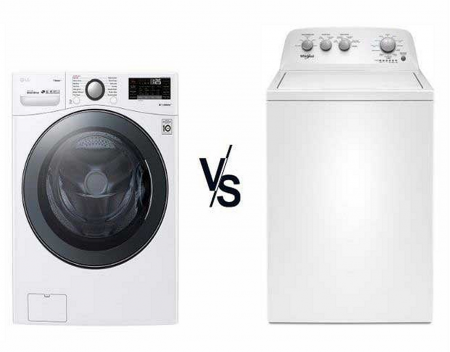
It's not easy buying a front load or top load washer these days. In this article, you will learn the pros and cons of top load and front load features, capacity, water extraction, energy efficiency, and washer reliability.
Let's break the first myth by looking at the reliability difference between front and top load washers for 2022.
Are Top Load Washers More Reliable Than Front Load Washers?
Below are our most recent reliability stats for front load and top load washers.
We calculate washer reliability by dividing the products we serviced by the products we sold.
For this report, we looked at the number of front washers sold and serviced from December 2020 to October 2021.
Front Load Washer Reliability
The most reliable front load washers are based on a minimum of 300 front load washers sold per brand and a total sample of over 3000 from December 2020 to October 2021.
The average repair rate for top load washers is 6.3%, or about 3.2% better than appliances in general.
Top Load Washer Reliability
The most reliable top load washers are based on a minimum of 150 sold per brand with a sample of over 900 units.
Not what you expected? Front load and top load washers are statistically nearly the same at 6.3% vs. 5.7%.
Both are much lower than the average for appliances at about 9.5%.
Which Lasts Longer: Front Loads or Top Load Washers?
Most review sites will have top load washers lasting an average of 14 years and front load washers lasting at 11 years.
However, since these sites offer no service or documentation, these numbers are completely arbitrary.
That said, you should expect at least a 10-year life on both, depending on how you use and maintain your washer.
Front Load Washer Problems: Why People Hate Their Front Load Washers
A prominent Google search is "I hate my front load washer."
There is one probable reason: Front load washers are much more difficult to repair, especially the motor.
For example, if you buy a five-year warranty from us and have a motor issue, we automatically replace the machine even at year five.
It's less of a hassle for you to wait for all the parts and less expensive for us to replace the washer rather than buying the parts with over five hours of labor needed to fix it.
Mold, Mildew, and Odor Issues in Front Load Washers
There are problems with mold to a certain extent, but it's controllable.
Mold, mildew, and odor are a function of standing water.
You should dry the gasket and the back of the machines after every use. You also should leave the door open to dry any residual moisture.
Every month, just run the machine in a hot water wash. There are machine cleaning products, like Affresh, to help as well.
GE front load washers have Microban antimicrobial surfaces preventing the build-up of mold along with GE’s UltraFresh fan. The fan inside the drum dries the residual moisture.
Samsung introduced similar CleanGuard technology as well.
Front Load vs. Top Load vs. Hybrid Washers: Pros and Cons
Front Load Washers
Front-load washers have the largest capacity, up to 6 cubic feet, along with the most advanced speed, AI (Artificial Intelligence), and Wi-Fi cycles.
You also have a higher spin speed up to 1300 RPM (Revolutions Per Minute) versus 800 RPM for the average top load washer.
Front loads use less water, electricity, and detergent than any washer type.
They are also gentler on your clothes. Clothes are never knotted or ripped in a front load, from my experience, versus a top load washer.
Pros: More capacity, better cycles, lower cost of operation for water and electricity, as well as less detergent needed
Cons: More expensive to buy and fix. You can develop mold as standing water can be left in the gasket and the dispenser.
Pro Tip One: You can eliminate mold by wiping down the gasket and dispenser and leaving them open.
Pro Tip Two: Buy a front load washer between 4.5 and 5 cubic feet for the best features and price. The larger 5.5-6 cubic foot capacity washers become too expensive for the marginal gain in capacity.
Top Load Washers
Top-load washers didn't change much until recently. Now they have larger sizes and better features.
The agitator stirs the clothes and detergent to clean. Agitators can be tough on clothes, especially more delicate fabrics.
Bed sheets can be knotted around the agitator as well.
Pros: It's a lot less expensive, starting at $400 and up. The machine does work.
Cons: You use much more energy, water, and detergent with less capacity. You also can't buy a top load washer with advanced technology like auto dispensers or advanced cycles.
Washer Energy Efficiency Differences
Electrical Energy Efficiency
I wanted to break down the costs between the different types of washers. It's hard to do because the hybrids and front loads are about twice as large.
Electricity Costs for Washing Machines:
Top-load washers use about 348 kWh (kilowatt-hour) yearly.
Hybrid washers use about 212 kWh yearly.
Front-load washers use about 159 kWh yearly.
In Boston, with 22.5 cents per kilowatt-hour, there is a $22 difference per year to run a top-load versus a front-load based on 1.5 hours of usage per day.
Of course, front-load washers have greater capacity, so that you will use them less or use a top load more.
The difference is around $40 to $50 per year, factoring in size.
Water Usage
The average top load washer uses 40 gallons of water and up to 70 gallons on deep fill cycles. A hybrid top load washer uses about 17 gallons while front-load washers use about 10-14 gallons of water.
The average water and sewer bill for Boston is $17.77 cents per 1,000 gallons or .017 cents a gallon. The average front load washer is about .21 cents per load.
A top load washer is about .51 cents per load as a rough average.
You would have to multiply the top load again because the capacity is much smaller.
Source: Re-posted and Summarized from STEVE SHEINKOPF at yale appliance.
It's not easy buying a front load or top load washer these days. In this article, you will learn the pros and cons of top load and front load features, capacity, water extraction, energy efficiency, and washer reliability.
Let's break the first myth by looking at the reliability difference between front and top load washers for 2022.
Are Top Load Washers More Reliable Than Front Load Washers?
Below are our most recent reliability stats for front load and top load washers.
We calculate washer reliability by dividing the products we serviced by the products we sold.
For this report, we looked at the number of front washers sold and serviced from December 2020 to October 2021.
Front Load Washer Reliability
The most reliable front load washers are based on a minimum of 300 front load washers sold per brand and a total sample of over 3000 from December 2020 to October 2021.
The average repair rate for top load washers is 6.3%, or about 3.2% better than appliances in general.
Top Load Washer Reliability
The most reliable top load washers are based on a minimum of 150 sold per brand with a sample of over 900 units.
Not what you expected? Front load and top load washers are statistically nearly the same at 6.3% vs. 5.7%.
Both are much lower than the average for appliances at about 9.5%.
Which Lasts Longer: Front Loads or Top Load Washers?
Most review sites will have top load washers lasting an average of 14 years and front load washers lasting at 11 years.
However, since these sites offer no service or documentation, these numbers are completely arbitrary.
That said, you should expect at least a 10-year life on both, depending on how you use and maintain your washer.
Front Load Washer Problems: Why People Hate Their Front Load Washers
A prominent Google search is "I hate my front load washer."
There is one probable reason: Front load washers are much more difficult to repair, especially the motor.
For example, if you buy a five-year warranty from us and have a motor issue, we automatically replace the machine even at year five.
It's less of a hassle for you to wait for all the parts and less expensive for us to replace the washer rather than buying the parts with over five hours of labor needed to fix it.
Mold, Mildew, and Odor Issues in Front Load Washers
There are problems with mold to a certain extent, but it's controllable.
Mold, mildew, and odor are a function of standing water.
You should dry the gasket and the back of the machines after every use. You also should leave the door open to dry any residual moisture.
Every month, just run the machine in a hot water wash. There are machine cleaning products, like Affresh, to help as well.
GE front load washers have Microban antimicrobial surfaces preventing the build-up of mold along with GE’s UltraFresh fan. The fan inside the drum dries the residual moisture.
Samsung introduced similar CleanGuard technology as well.
Front Load vs. Top Load vs. Hybrid Washers: Pros and Cons
Front Load Washers
Front-load washers have the largest capacity, up to 6 cubic feet, along with the most advanced speed, AI (Artificial Intelligence), and Wi-Fi cycles.
You also have a higher spin speed up to 1300 RPM (Revolutions Per Minute) versus 800 RPM for the average top load washer.
Front loads use less water, electricity, and detergent than any washer type.
They are also gentler on your clothes. Clothes are never knotted or ripped in a front load, from my experience, versus a top load washer.
Pros: More capacity, better cycles, lower cost of operation for water and electricity, as well as less detergent needed
Cons: More expensive to buy and fix. You can develop mold as standing water can be left in the gasket and the dispenser.
Pro Tip One: You can eliminate mold by wiping down the gasket and dispenser and leaving them open.
Pro Tip Two: Buy a front load washer between 4.5 and 5 cubic feet for the best features and price. The larger 5.5-6 cubic foot capacity washers become too expensive for the marginal gain in capacity.
Top Load Washers
Top-load washers didn't change much until recently. Now they have larger sizes and better features.
The agitator stirs the clothes and detergent to clean. Agitators can be tough on clothes, especially more delicate fabrics.
Bed sheets can be knotted around the agitator as well.
Pros: It's a lot less expensive, starting at $400 and up. The machine does work.
Cons: You use much more energy, water, and detergent with less capacity. You also can't buy a top load washer with advanced technology like auto dispensers or advanced cycles.
Washer Energy Efficiency Differences
Electrical Energy Efficiency
I wanted to break down the costs between the different types of washers. It's hard to do because the hybrids and front loads are about twice as large.
Electricity Costs for Washing Machines:
Top-load washers use about 348 kWh (kilowatt-hour) yearly.
Hybrid washers use about 212 kWh yearly.
Front-load washers use about 159 kWh yearly.
In Boston, with 22.5 cents per kilowatt-hour, there is a $22 difference per year to run a top-load versus a front-load based on 1.5 hours of usage per day.
Of course, front-load washers have greater capacity, so that you will use them less or use a top load more.
The difference is around $40 to $50 per year, factoring in size.
Water Usage
The average top load washer uses 40 gallons of water and up to 70 gallons on deep fill cycles. A hybrid top load washer uses about 17 gallons while front-load washers use about 10-14 gallons of water.
The average water and sewer bill for Boston is $17.77 cents per 1,000 gallons or .017 cents a gallon. The average front load washer is about .21 cents per load.
A top load washer is about .51 cents per load as a rough average.
You would have to multiply the top load again because the capacity is much smaller.
Source: Re-posted and Summarized from STEVE SHEINKOPF at yale appliance.

Jennifer Garner Joins The KitchenAid Team

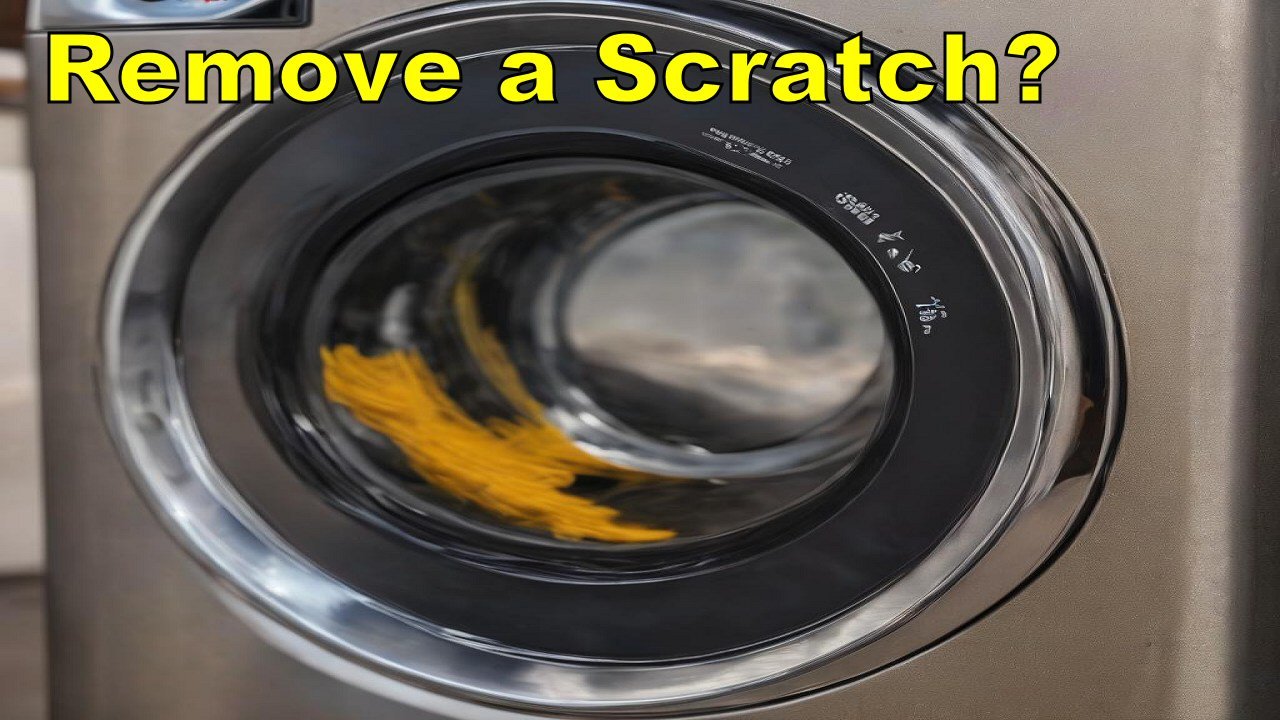
How Do I Remove a Scratch From My Stainless Steel Washer?
How to make your microwave last longer
New hair dryer that is better for your hair announced by T3 Micro
How to Diagnose a Dryer Problem?
Stopping Cross-Contamination in the Refrigerator